The AI Bubble Might Not Pop on Wall Street
It might pop in your living room.

Right now, the story of AI is being told with hard hats and balance sheets.
It’s told in megawatts, square footage, fiber runs, liquid cooling, and the familiar Silicon Valley chant: scale first, figure it out later. It’s told in billion-dollar capex announcements and breathless forecasts that read like the manifest destiny.
And sure, the infrastructure build-out is real. You don’t pour concrete and pull cable because you’re “kind of interested.” You do it because you believe a wave is coming.
But here’s the thing I can’t stop thinking about:
What if the consumer decides whether this wave ever reaches the shore?
What if the bubble doesn’t pop because the GPUs run out, or power gets expensive, or investors get bored?
What if it pops (or deflates, or simply stalls) because regular people shrug?
Because the consumer looks at AI and says:
“Cool. But what’s in it for me?”
“Is it worth the money?”
“Can I trust it?”
“Does it make my life better… or just noisier?”
That’s the under-discussed tension inside this entire moment: AI is being built like a certainty, but adoption is still a choice. And over the next decade, that choice gets made billions of times, quietly, on phones, in workplaces, in homes, in purchasing decisions that never trend on Twitter.

Data centers don’t create value. People do.
A data center is a factory. It’s the thing that enables production. It’s not the product.
And factories can absolutely be overbuilt.
History is full of “obvious futures” that needed consumer behavior to cooperate. Some did. Some didn’t. Plenty arrived later than expected. Plenty arrived in a different form than promised.
When it comes to AI, the infrastructure is rushing ahead because it can. Because capital knows how to fund tangible things. Because it’s easier to justify “we need more capacity” than “we need more trust.”
But monetization doesn’t happen at the rack, it happens at the checkout button.
If the average person isn’t willing to pay for AI, tolerate it, or make space for it in their daily routines, the whole business model gets wobbly real fast.
Which raises the real question for the next decade:
What shapes consumer sentiment toward AI? What makes people embrace it, reject it, or accept it reluctantly like a mandatory app update?
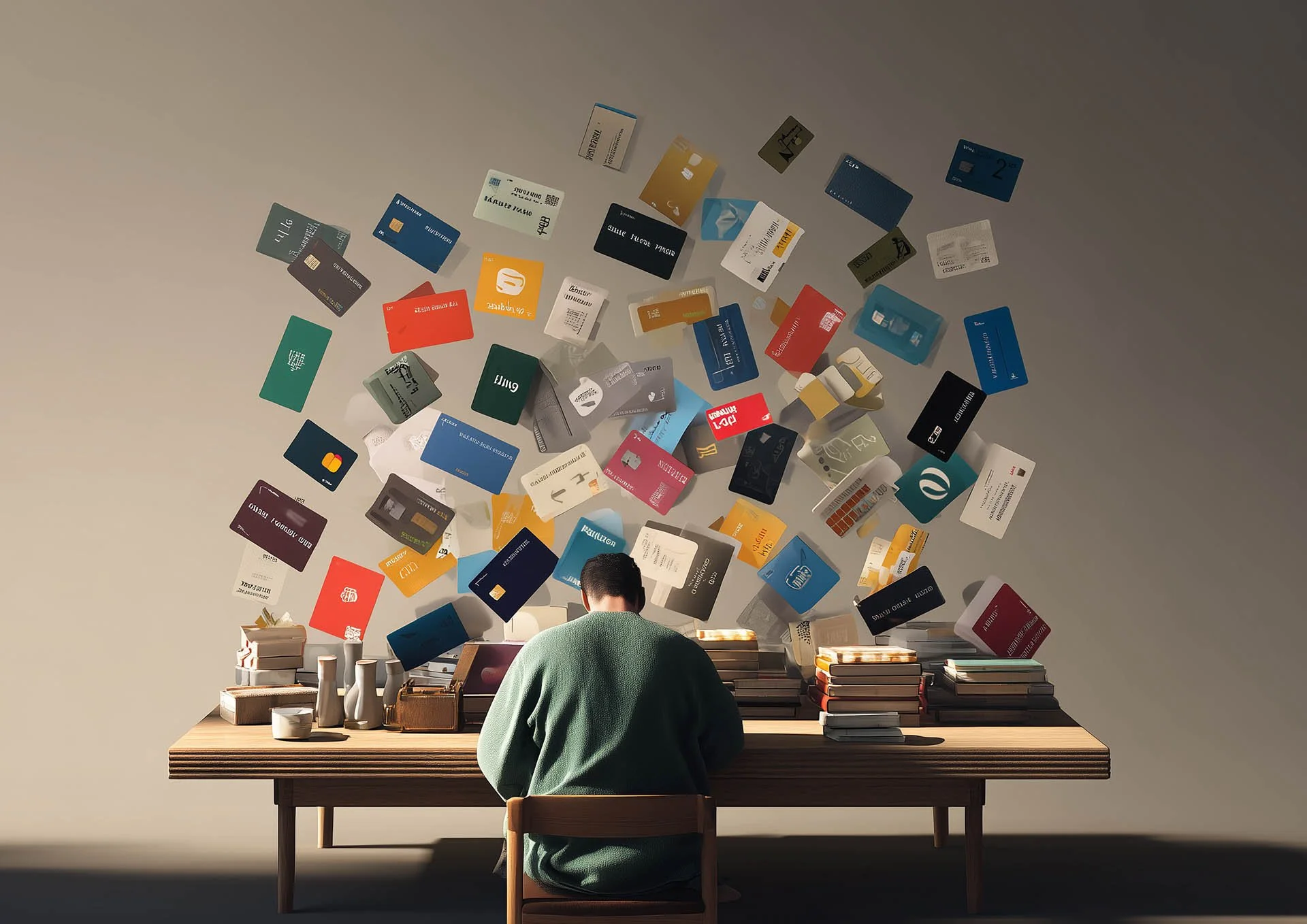
The consumer’s AI decision is mostly emotional
People don’t adopt technology because it exists, no matter how hard the marketing pushes. They adopt it because it feels useful, safe, and worth the trade. Just look at Dell’s leadership for reasons why.
Consumer sentiment isn’t one thing. It’s a bundle of instincts:
“Does it actually help me?”
Not in a demo. Not in a keynote. In the messy, time-starved reality of normal life.
AI wins when it reliably removes friction: writing, searching, planning, learning, troubleshooting, creating, organizing. Real help. Not magic. Not vibes. Help.
The moment AI becomes predictably useful, it stops being a novelty and starts being infrastructure inside the consumer’s brain. It becomes something they reach for without thinking.
“Is it going to embarrass me?”
A lot of early AI adoption has a quiet fear under it: What if this makes me look stupid?
People don’t want to be the person who confidently sends the wrong email, submits the wrong homework, or publishes the wrong “facts” because an AI hallucinated with a straight face.
Trust is a consumer feature. And trust is fragile.
“Is it taking something from me?”
This is the part the industry keeps stepping around.
Consumers don’t only evaluate what AI gives them. They also evaluate what it costs them: privacy, control, dignity, jobs, human contact, creative identity, even the feeling that they’re living in an authentic world.
If AI feels like a tool, people lean in.
If it feels like a takeover, people push back.
“Do I have to pay?”
This is where the rubber meets the road.
Consumers are increasingly subscription-fatigued. Another $20 here, another $10 there, another “premium tier” to unlock what used to be normal.
If AI becomes a tax on basic functionality, sentiment turns. Quickly.
And if businesses can’t charge consumers, they’ll try to monetize elsewhere: ads, data, lock-in, enterprise contracts. Each of those has its own sentiment risk.

The bubble (if it’s a bubble) pops when expectations meet reality
When people say “AI bubble,” they often mean one of two things:
The technology can’t deliver what was promised
The business models can’t justify the spend
The second one is where consumers become kingmakers.
Because monetization depends on adoption curves. And adoption curves depend on sentiment.
If consumers love AI, the spend looks smart in hindsight.
If consumers tolerate it, we get slow growth and consolidation (the post-COVID pattern).
If consumers resent it, the market punishes the overbuild with a biblical ‘‘.
And resentment doesn’t have to look like protests. It can be something much quieter and more devastating:
low conversion rates
privacy lawsuits
regulation
brand damage
canceled subscriptions
“we tried it and nobody used it”
features getting buried in bad UX
companies pivoting away from “AI-first” messaging without admitting it
The bubble doesn’t have to explode… in a kind of Schrödinger’s logic there might be a future state where it has failed to inflate in the first place.

Over the next decade, consumer sentiment will swing on three battlegrounds
~ Trust and authenticity ~
Deepfakes, scams, synthetic content floods, AI-generated “reviews,” AI-generated “news,” AI-generated everything.
If the internet becomes a hall of mirrors, consumers will demand filters, verification, provenance. They will crave realness the way people crave clean water after a contamination scare.
Companies that can prove authenticity will win sentiment.
Companies that can’t will feel the drag.
~ The price of convenience ~
AI will increasingly become a convenience layer on top of everything. And convenience is addicting.
But the question consumers will ask is: “Why is this convenience so expensive?”
If the value proposition isn’t obvious, subscription culture hits a wall. Consumers will keep the one or two tools that genuinely feel like superpowers, and cut the rest.
That will shape which companies survive, which models get funded, and how much compute is actually needed.
~ The “human” premium ~
As more content becomes synthetic, real human craft will become a premium signal.
Not everywhere. Not for everything. But in the places where people care: art, storytelling, education, leadership, relationships, brand voice, taste.
Consumers will decide when they want automation and when they want a person. That preference will ripple backward into the economics of AI.
If AI is positioned as “replacing humans,” sentiment fractures.
If it’s positioned as “amplifying humans,” sentiment may grow (but it’s a fine line)

the next decade is less “mass adoption” and more “selective dependency”
I don’t think consumers will simply adopt AI across the board like they did electricity.
I think they’ll adopt it like caffeine: intensely, strategically, sometimes compulsively, and with growing concern about side effects.
They’ll use it where it saves them time.
They’ll reject it where it feels invasive.
They’ll pay for it when it feels like a secret advantage.
They’ll punish it when it feels like unrequited manipulation.
Which means the winners won’t be the companies that yell “AI!” the loudest.
They’ll be the ones that do the boring, unglamorous work of earning consumer trust:
clear value
transparent pricing
privacy that isn’t a trick
reliability that doesn’t crumble under pressure
products that don’t make people feel like they’re being farmed

So… what if the consumer pops the bubble?
Then the AI era doesn’t end. It just becomes adult.
The investment frenzy cools. The weakest business models collapse. The hype vocabulary gets replaced by quieter language: “automation,” “assistants,” “workflow,” “decision support.” The compute arms race becomes less of a land grab and more of an optimization problem.
And the AI that survives is the AI people actually want.
That’s the part I find strangely hopeful.
Because if the consumer gets to decide, then the future isn’t only built by whoever can raise the most money and deploy the most racks.
It’s built by whoever can earn trust in the real world.
And the real world has a way of voting with its feet.
Quietly.
Relentlessly.
One choice at a time.